Hot Yoga for Runners: Fitting Mobility Work Around Your Weekly Miles
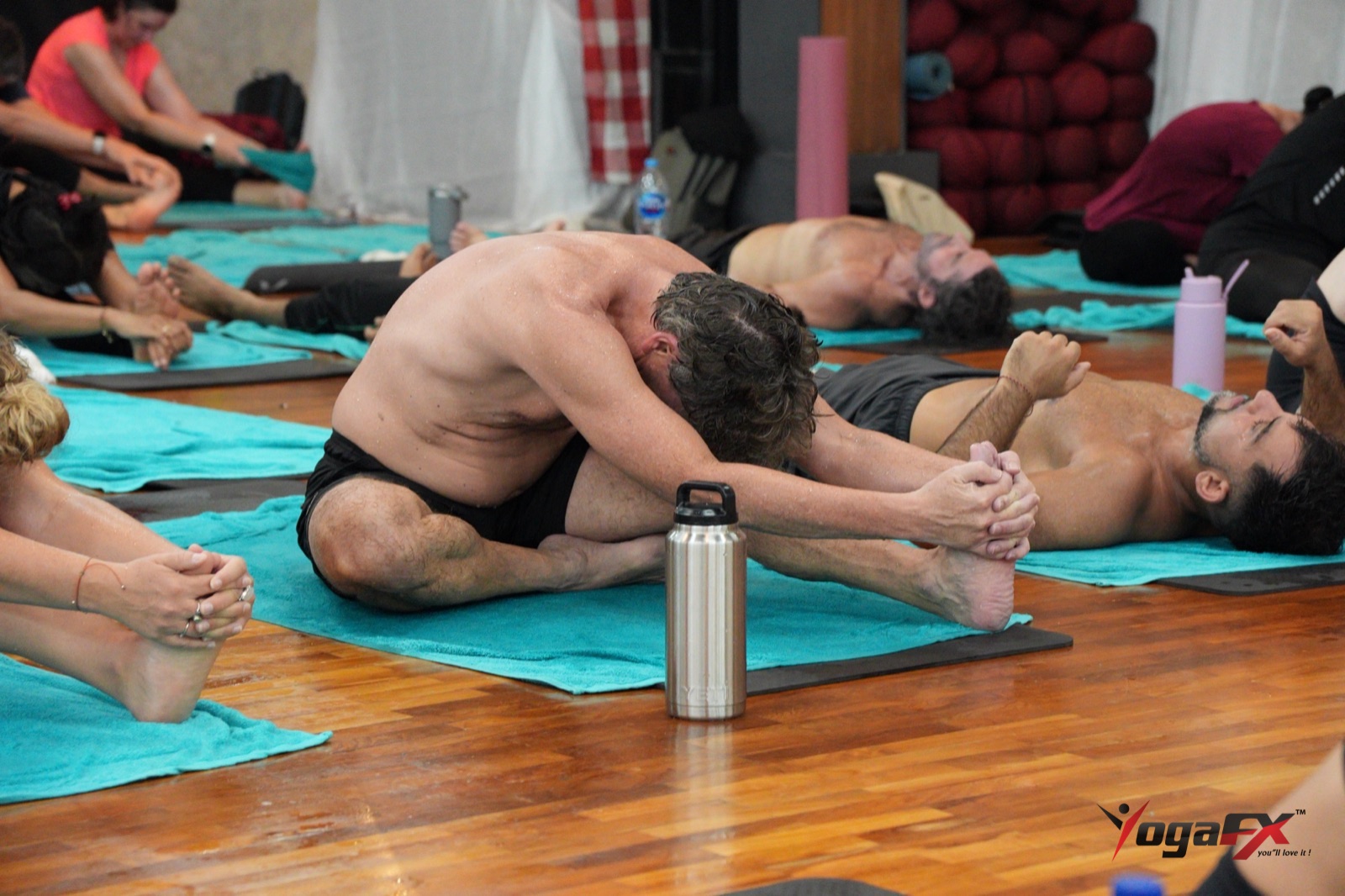
Hot yoga for runners works best once or twice a week, on an easy or rest day, and counted as a moderate session in your plan. Keep it to 60 to 90 minutes, drink steadily, and never schedule it before a key workout. Done that way, it supports your miles instead of competing with them.
Hot Yoga for Runners: The Short Answer
Most people who search for hot yoga for runners have one question: will this help my running or cost me a long run?
The honest answer is that it depends on where you put it, and that is the whole point of this guide to hot yoga for runners. A heated class is not a stretch session. It is 90 minutes of standing, balancing and bending in 40°C heat, so your heart rate stays up the whole time.
Because of that, think of hot yoga for runners as a third kind of day. It is not a hard run and it is not a full rest day. It sits in the middle, and it works when you plan around it.
Here is the rule of thumb we give runners who ask Mr. Ian Terry how to start:
- Once a week first. Give your body three or four weeks before you try a second class.
- Easy or rest days only. Never place a heated class the day before a long run, a race or a track session.
- Hydrate before, not just during. Start drinking the evening before, and keep water within reach.
- Stop when it stops being useful. Dizziness, a pounding headache or chills mean you leave the room.
That is the whole plan in four lines. The rest of this guide explains why each line matters, shows a sample week, and covers the science behind it. If you are new to heat, read the section on heat rules before your first class.
Where Hot Yoga Fits in a Running Week
A running week has a shape, and hot yoga for runners only works when it respects that shape. Most of your runs are easy, one or two are hard, and one is long. Hot yoga should slot into the easy part of that shape, so the hard parts stay hard and the easy parts stay easy.
The table below shows a sample week for a runner covering about 40 kilometres. Use it as a pattern, not a prescription. Move the days around your own schedule, and cut the yoga first if you feel run down.
| Day | Running | Yoga | Why it works |
|---|---|---|---|
| Monday | Rest or 30-minute easy jog | 60-minute heated class | Loosens hips and calves after the weekend long run |
| Tuesday | Intervals or hills | None | Hard day stays protected |
| Wednesday | 40-minute easy run | None, or 15 minutes of home mobility | Easy mileage and a light stretch |
| Thursday | Tempo run | None | Second hard day, no heat |
| Friday | Rest | Short home session, unheated | Keeps hips moving before the weekend |
| Saturday | Easy 30-minute shakeout | None | Legs fresh for tomorrow |
| Sunday | Long run | None | Rehydrate and refuel instead |
Notice that heat appears only once. For most runners, one heated class a week is enough to see whether it helps. If your legs feel better the next morning, you can try a second class on another easy day.
If you cannot get to a hot room that often, an unheated session at home does most of the same mobility work. We cover that later in this guide, and our guide to yoga for athletes recovery lays out gentle routines for the day after hard training.
What the Research Says About Hot Yoga for Runners
Runners follow a simple pattern, and the science backs it. A 2010 review in the International Journal of Sports Physiology and Performance looked at how successful endurance athletes actually train. Seiler's review found that about 80% of their sessions were low intensity, with roughly 20% devoted to hard work.
That ratio matters for hot yoga for runners, because a heated class is not low intensity. A 2014 University of Wisconsin-La Crosse study of 90-minute Bikram classes (Porcari et al.) measured about 333 calories for women and 460 for men. Average heart rate sat near 80% of maximum. That is a real workload, so it belongs in your moderate column, not your recovery column.
Why your hard days still come first
Hard running has its own evidence. Helgerud and colleagues reported in 2007 that aerobic interval sessions raised VO2max more than moderate-intensity training. For you, that means your hard days are doing important work. If a heated class leaves you too tired to run well on them, the class is costing you more than it gives.
About 80%
of sessions in successful endurance training are low intensity, with roughly 20% hard work.
Seiler, 2010
5 days
of controlled heat acclimation cut 5-km time in the heat by 6.2% in 17 runners, versus 0.6% for the cool group.
James et al., 2017
333 / 460
calories burned in a 90-minute Bikram class, women and men, at about 80% of maximum heart rate.
Porcari et al., 2014
90 min
is one Original Hot 26&2 class at 40°C and 40% humidity, so count it as a moderate session.
YogaFX class format
What about heat itself?
Heat is where hot yoga for runners could add something running alone does not. In a 2017 study, James and colleagues put 17 runners through five days of controlled heat acclimation. The heat group improved their 5-km time in hot conditions by 6.2%, while the matched cool-weather group improved by 0.6%.
Two cautions apply. First, that was a laboratory protocol, not a yoga class. Second, it was a small group. So treat it as a sign that your body adapts to heat, not as a promise that a class will make you faster. If you race in warm weather, regular exposure may help you handle it, and that is a fair reason to try.
As always with health topics, research suggests rather than proves. Speak with your doctor or a sports medicine professional if you have a heart condition, low blood pressure, or a history of heat illness before you start.
Heat Rules for Hot Yoga for Runners
Runners are used to sweating. That is exactly why heat catches them off guard. You lose fluid faster in a 40°C room with 40% humidity than on an autumn road. The rules below keep a good session from turning into a bad week.
Before class
- Drink steadily for 24 hours. Do not try to catch up with a litre in the last hour.
- Eat a light meal two to three hours before. A heavy lunch and forward folds do not mix.
- Skip the hard run that morning. Even an easy 10 kilometres adds to the load.
During class
- Sip, do not gulp. Small sips between postures settle better than big mouthfuls.
- Rest when you need to. Sitting or lying on the mat is part of the practice, not a failure.
- Watch your heart rate. If it feels like a tempo run, back off the effort and keep breathing slowly.
After class
- Rehydrate with water and salt. A pinch of salt in food or an electrolyte drink helps replace what you sweat out.
- Eat within an hour. Carbohydrate and protein support your next run.
- Check your morning pulse. If it is clearly higher than normal the next day, treat that day as rest.
Whatever your level, leave the room at once if you feel faint, confused, nauseous or very cold. These are warning signs of overheating, not toughness tests. Tell the teacher, sit near the door, and cool down gradually.
Which Postures Matter Most in Hot Yoga for Runners
The Original Hot 26&2 sequence uses the same 26 postures in the same order every class. That repetition is useful for runners, because you can track how one posture feels from week to week. Hips that opened easily in October but feel tight in November tell you something about your training load.
Instead of describing all 26, here are the ones runners usually ask about. The table shows what each posture works on and what to watch for.
| Posture | Main area worked | Runner's note |
|---|---|---|
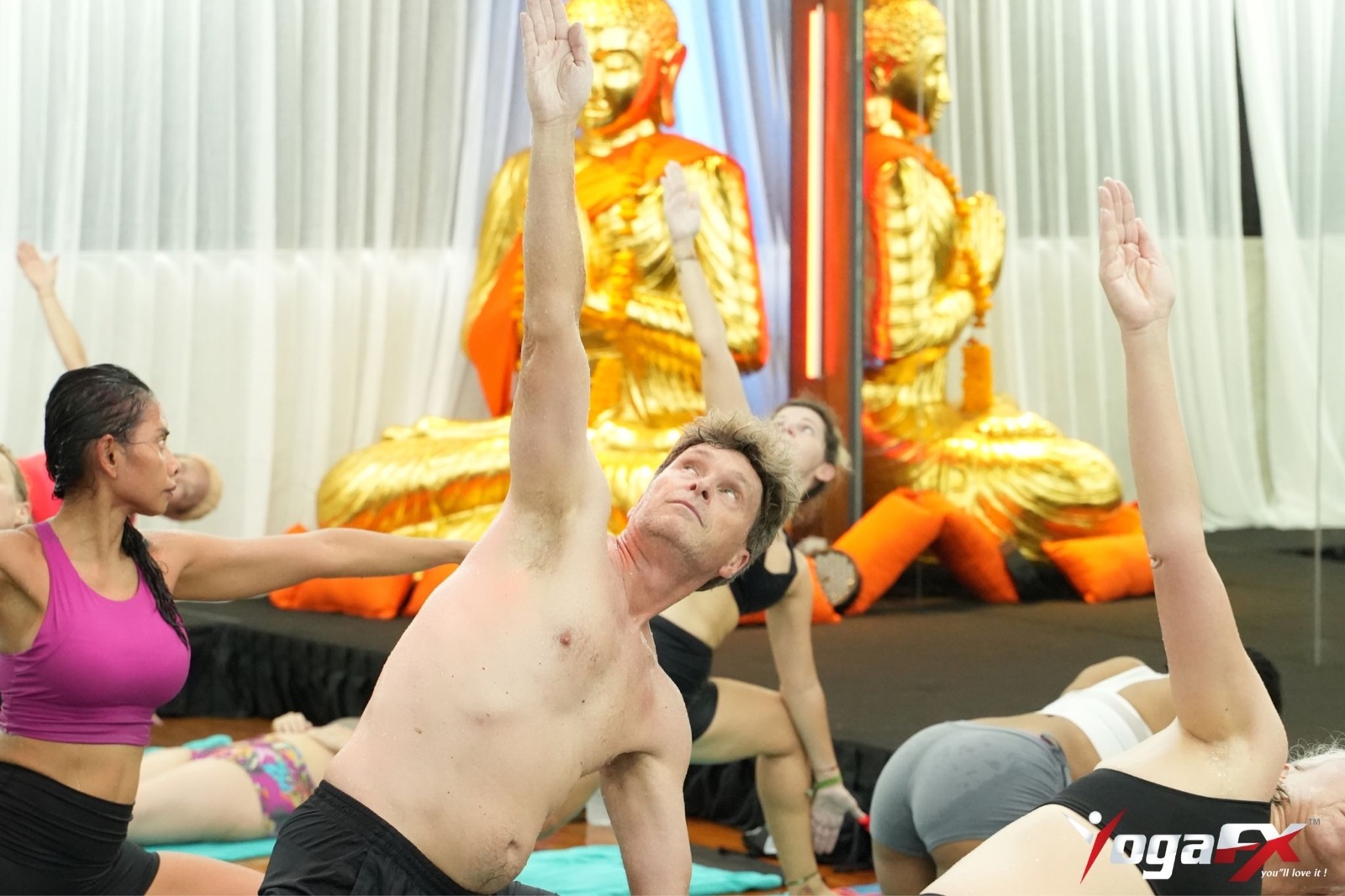
| Half Moon | Sides of the trunk, hips | Opens the sides of the body that tighten during long runs |
| Awkward Pose | Quads, calves, ankles | Builds ankle and thigh endurance; keep knees pain-free |
| Standing Head to Knee | Hamstrings, balance | Trains single-leg balance, which you use on every stride |
| Triangle | Hips, hamstrings, inner thighs | Lengthens the legs while the trunk stays upright |
| Toe Stand | Feet, ankles, balance | Challenges foot control; skip it if you have plantar pain |
| Wind Removing | Hips, lower back | A gentle floor release after standing work |
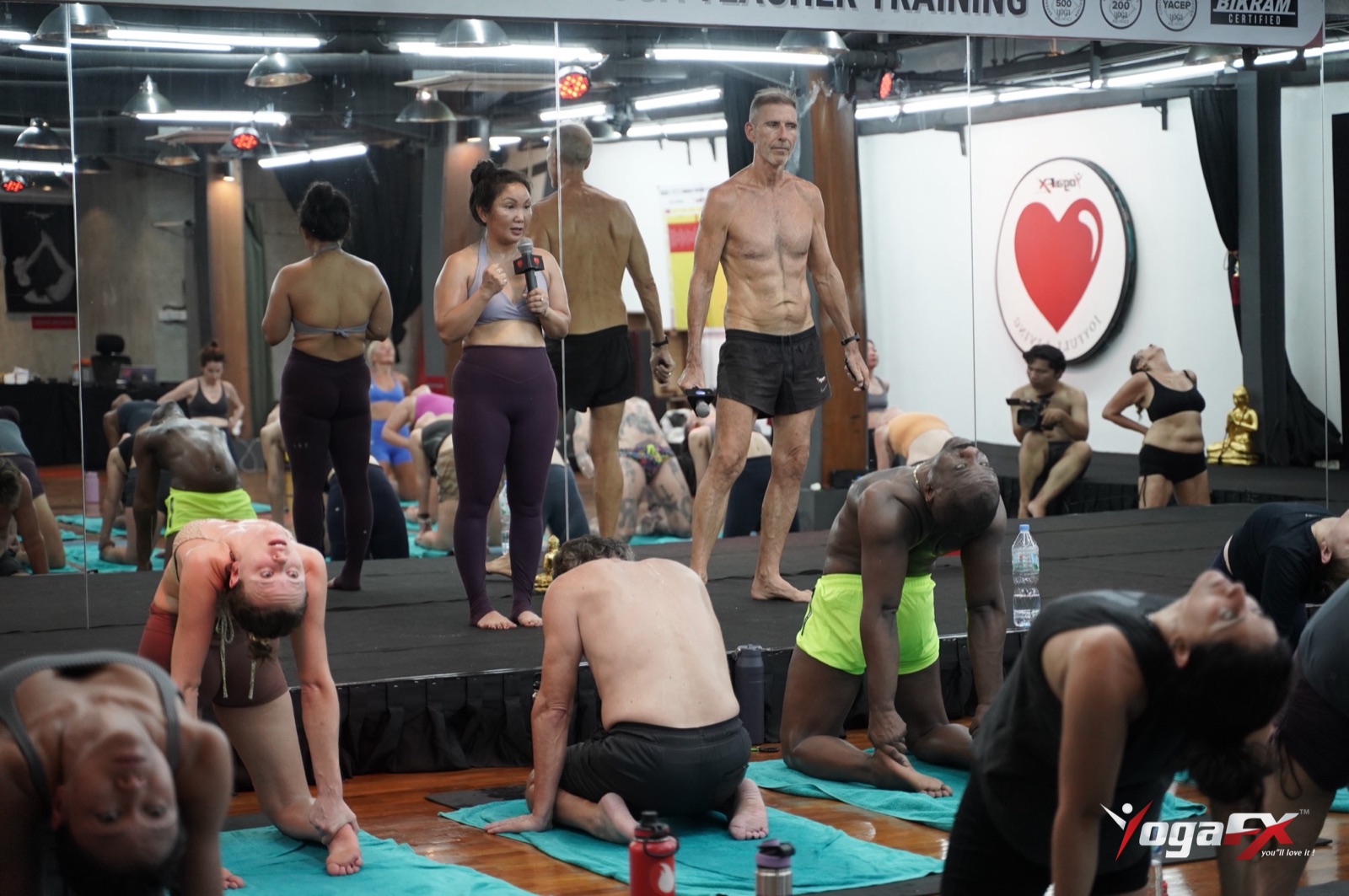
| Camel | Hip flexors, front of the body | Counters hours of forward-leaning running and desk work |
These notes on hot yoga for runners are general guidance, not medical advice. If a posture aggravates an old injury, skip it or ask a qualified teacher for a modification. A good teacher will always prefer you rest than push through pain.
Why breathing matters to runners
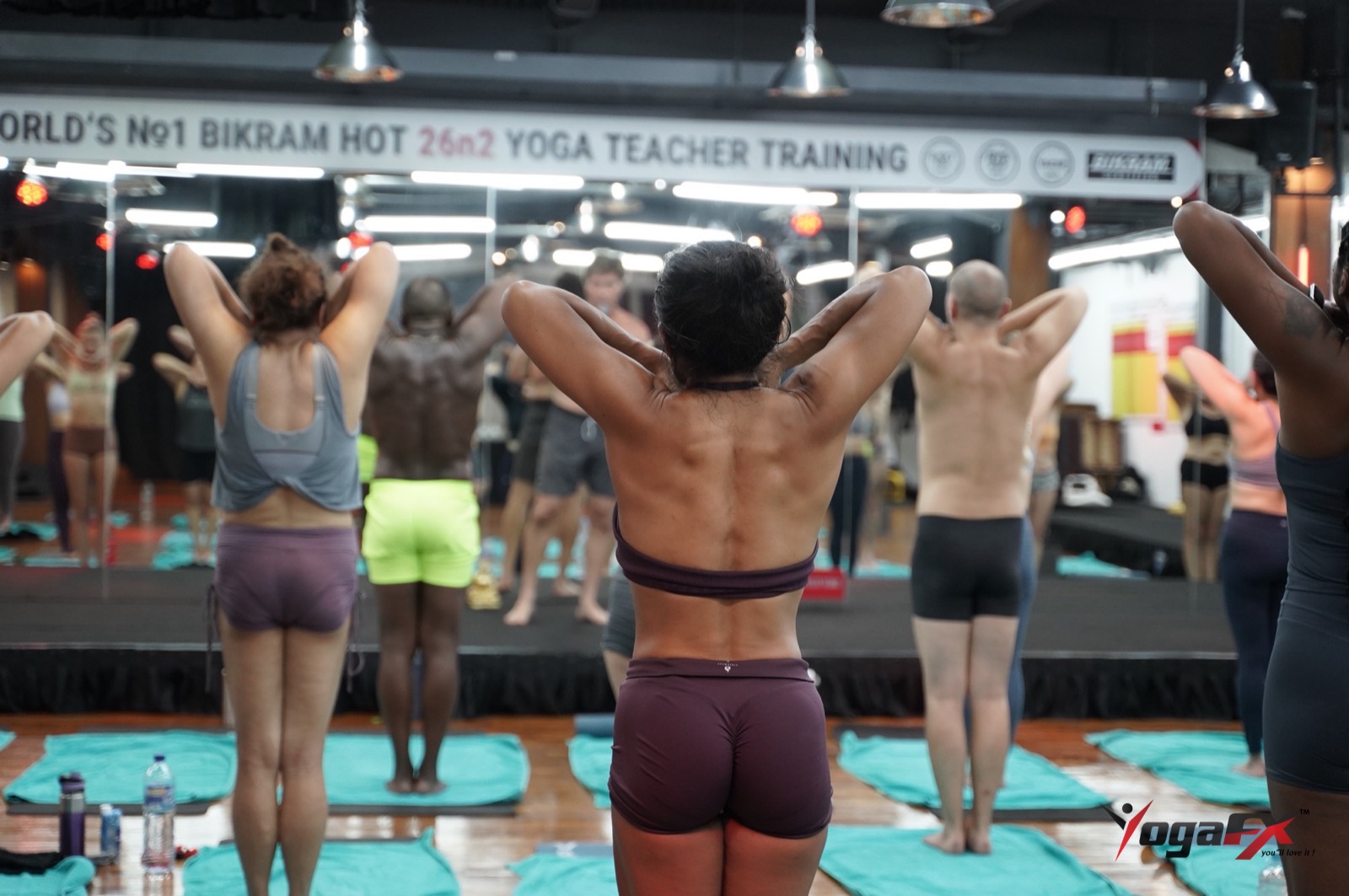
Every Original Hot 26&2 class opens with Standing Deep Breathing (the first pranayama exercise). It looks simple, yet it teaches you to slow your breath while your heart rate climbs. Runners can carry that skill straight into a hard interval or the last kilometres of a race.
In practice, that means you learn to stay calm when things get uncomfortable. That is the same skill you need when the pace gets hard, and it is one of the quieter reasons runners keep coming back to the mat.
Three Safe Ways to Fit Hot Yoga Into Your Miles
There is no single correct schedule for hot yoga for runners. Below are three patterns that work for different kinds of runners. Pick the pattern of hot yoga for runners that matches your training, and adjust after a month.
1. The easy-day swap
Replace one easy run a week with a heated class. Your legs get a day off from impact, your hips and calves get a long stretch, and your weekly kilometres drop only slightly. This suits runners who add mileage quickly and feel niggles in their shins or knees.
2. The rest-day mobility session
Keep your rest day, but add a shorter 60-minute heated class of hot yoga for runners or a home session. This fits runners on four or five days a week who feel stiff on rest days. Because you are not running at all, the extra load is easy to absorb.
3. The post-race reset
After a race, wait several days before any heated class. Start with an unheated home session, then move to a heated class once your legs feel normal. As a result, you avoid stacking heat stress on top of a body that is still repairing itself.
Whichever pattern of hot yoga for runners you pick, write down how your next run felt. After four weeks you will have your own data, and your own data beats any article.
Hot Yoga for Runners at Home: When You Cannot Get to a Hot Room
Many runners live nowhere near a hot studio, and hot yoga for runners at home is a fair place to start. Most of the mobility benefit comes from the postures and the slow breathing, not from the temperature. A warm room, a mat and a teacher's voice are enough to start.
That is why we built our online practice around the same Original Hot 26&2 sequence. You can follow the dialogue at home at your own pace, on your own schedule, and add heat gradually as your body adapts. Our guide to hot yoga as a man walks through that gradual build, and it works equally well for runners of any gender.
If you do feel flat after a class, you are not alone. Our guide to tired after hot yoga explains why the tiredness appears, how long it lasts, and what to do about the next workday.
What Students Say About the Hard Parts
Anyone who tries hot yoga for runners learns quickly that the hardest part of any plan is showing up when it gets uncomfortable. Our students describe the same thing on the mat. Here is what three of them told us in video reviews.
"This is really hard and it's really wonderful at the same time."
Liz, YouTube review, 2025
Daniela said she wanted to quit on the first and second day, then remembered Mr. Ian's question about how many times she would quit things that are hard. She stayed, and finished. (paraphrased)
Daniela, YouTube review, 2025
Dee called the experience "a rejuvenating transformational experience" and said strangers became good friends in a flash.
Dee, YouTube review, 2019
None of these students were talking about hot yoga for runners. Still, the lesson carries over. The skill of staying with a hard minute, and not quitting it, is the same one that gets you through week eight of a marathon block.
How Mr. Ian Terry Teaches the Original Hot 26&2 Class
Mr. Ian Terry is an E-RYT 500 teacher with more than 12,000 teaching hours and over 1,500 graduates from 80+ countries. His classes run 90 minutes in 40°C heat and 40% humidity, taught from a scripted dialogue with no music and no demonstration. The voice does the guiding, so you learn to listen to your own body instead of copying the person on the next mat.
For hot yoga for runners, that style has a practical benefit. Nobody is showing you a deeper version to chase, and the dialogue repeats the same cues every class. You can match the effort to your own legs on the day. That is exactly what hot yoga for runners needs.
Many of our online students begin as runners or other athletes who want to understand their bodies better, and some go on to teach. If that sounds like you, read our guide to hot yoga teacher training or see how online yoga teacher certification works around a full-time job and a training plan.
FAQ: Hot Yoga for Runners, Answered
Is hot yoga good for runners?
Hot yoga can be good for runners when it replaces a hard day, not when it stacks on top of one. It trains hips, hamstrings, calves and breathing, and a 90-minute class counts as a moderate session. Start with one class a week and see how your next run feels.
Is hot yoga good for runners knee?
Runner's knee has several causes, so no class can promise to fix it. Tight hips and weak support muscles are common contributors, and gentle mobility work may help. Keep movements pain-free, skip any posture that aggravates the knee, and see a physiotherapist if pain lasts more than a couple of weeks.
Can I do hot yoga and running on the same day?
You can, but spacing matters. Run first and keep it easy, then do yoga several hours later with plenty of water, or do yoga on a separate day. Never run hard after a heated class, because you start already dehydrated and your heart rate runs higher than normal.
Is hot yoga good for running recovery?
It may help recovery when the class is gentle and you rehydrate well. The warm room encourages slow breathing and longer stretches. Right after a race or a very hard session, though, a cool, unheated home session is usually kinder than 90 minutes in 40°C heat.
Is Bikram yoga good for runners?
Bikram-style Hot 26&2 yoga can suit runners because the same 26 postures train hips, hamstrings, calves and spine in a fixed order, so you can track how you feel week to week. It is not a replacement for easy miles, and heat tolerance builds slowly over several classes.
Still have questions? Message Mr. Ian and the YogaFX team on WhatsApp and we will answer them personally. Start with one class, notice how your next run feels, and build from there. Always consult a healthcare professional before starting a new heated exercise routine.